Atlanta's Best Bat Removal
We've been voted Atlanta's best bat removal company the past two years!
Get in touch
Bat Experts
Rapid Response
Trained & Educated
Licensed & Certified
About Atlanta Bat Removal
Welcome to atlantabat.com. We are the only qualified bat removal company in Atlanta, Georgia. Bats are actually a remarkable species that make up around 20% of all the mammal species to be found around the world, and their adaptability has meant that they can from time to time make their home in domestic or commercial properties. While we know that bats can make good neighbors in terms of killing the population of airborne insects in the area, once they are inside a property, even these tiny animals can cause a remarkable amount of damage. The bulk of this damage comes through their feces and urine, and this can quickly build up in the insulation of a property, and has the risk of transmitting diseases such as histoplasmosis, as well as having a strong odor that can work its way throughout the property. For these reasons, you need a professional company that will know how to resolve your bat problem quickly, and you have certainly come to the right place. Our technicians have a thorough and detailed plan to assess your property's attic or loft space to find all of the holes that bats are using to get in and out, with some bat species able to squeeze into a hole as large as your thumbnail. They will then use exclusion techniques to get all of the bats out of this space, before fully sealing the space so that the bats will not be able to return to your property. Once this is done, we can also clean and remove any bat guano safely and securely, as well as replacing any soiled insulation and disinfecting the area for you as well. We operate 24-7-365, so don't hesitate to call us at 470-202-4338 to discuss your bat problem and schedule a fast appointment.
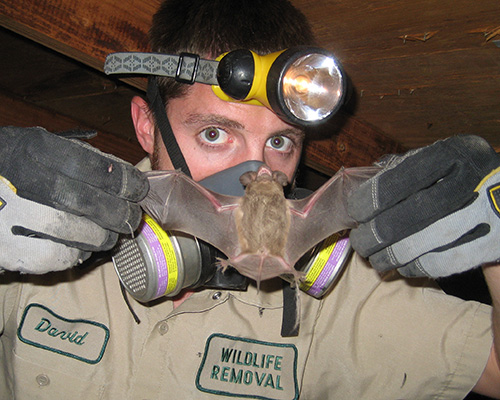
Residential
We are experts at removing bats from residential properties. Whether you have a single bat trapped in your house, a colony roosting in your attic, and/or various other problems, there is no need to worry! During our removal process, we make sure to inspect your entire home carefully, tracking down all the entrypoints bats are using to invade your place. Next, we perform a process called live exclusion (where no bats are harmed and all exit your property), then seal all entry holes completely shut. We also take care of the cleanup process after, so your home is safe and clean!
Learn MoreCommercial
Besides residential areas, we also have a wealth of experience removing bats from commercial properties! We begin by investigating the area for possible bat entrances, covering holes even as small as 1/4 of an inch. Through our live exclusion process, bats leave the building through one-way exits, and we seal up every hole afterward. Once the bats have been removed, we perform a cleanup process. This includes dealing with guano, replacing damaged insulation, and decontaminating the place.
Learn More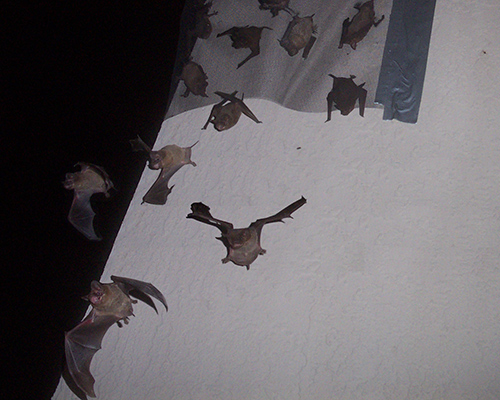
Contact us for bat removal today!
What Our Customers Say
I had a bat flying around in my house at 9pm, and CITY bat removal came right out and caught it in a net.
Sarah Lakewood
I had an annoying colony of bats stuck in my attic for a while before I finally decided to call for help. They were able to quickly and thoroughly solve the problem!
Brandon Chung
They did a great job clearing my attic of bats and didn't hurt any of the creatures.
Charlotte Demers
The technicians at CITY Bat Removal are skilled, professional, and know exactly what they're doing. Would highly recommend.
Mark O'Connor
My house stank of bats and their guano inside my wall. CITY Bat Removal not only removed the bats, they also got rid of the smell!
Alexis Ramirez
.jpg)
What is a Bat's Natural Diet?
In the world today, there are over a thousand species of bat. With so many varieties living in different parts of the world, it seems odd to think that most of them share any major similarities aside from appearance. In reality, many of these species feed on the same types of food.
The Most Common Diet
The most common bats feed on insects. Those insectivores use their echolocation to locate all manner of insects from the flying mosquitoes to crawling beetles. Approximately 70 percent of the bat population around the world is hunting insects every night.
While flying, they swoop up their prey with their wing or tail membranes. Then, without landing, they lead their prey right into their mouths to eat. Depending on the species of bat, they will eat insects in a different manner.
To capture insects on the ground, some bats will fly by and snatch it with their mouths to eat their meal where it is safer. Others will land right where they caught it and take off immediately after the meal is finished. Not flying for a bat can be dangerous.
In one hour, a small brown bat can consume around 600 mosquitoes. They live in colonies with thousands of bats, which means hundreds of thousands of insects get eaten. With such a helpful method of controlling the insect population, it is hard to know what might happen without these little critters.
Sweeter Than Honey
In various parts of the world, frugivores are bats that feed on flowers, nectar, pollen, or fruit. There is a larger variety of size bats that feed on these plants too. These mammals fly by fruits and snatch it up with their mouths, then perch to eat them. Sometimes, they like to feed on the sugar water from hummingbird feeders too.
The bats that feed on nectar have long tongues that slide into the long well of a flower that makes nectar. When not feeding, there is a small cavity in their chest between their heart and lungs that the excess tongue rests in. Unfortunately, these little bats are slowly going extinct. Finding their source of food is a lot harder for them than it is for the ones that eat fruit or insects.
In tropical regions, epaulette fruit bats eat a lot of figs every night, weighing up to three times their body weight. Most bats will avoid colored fruits or those with a strong scent, preferring to poke holes in the plant and suck out the juices. Seeds and pulp are then discarded which can help the local plant life spread. They usually focus on seasonal fruits but some of their favorites include mangoes, bananas, and dates.
Uncommon Diets
Other bats look to feed on various small prey. This can include fish, frogs, lizards, small birds, small rodents, and even other bats. They have larger feet with sharper claws to hook their prey for consumption. These carnivores of the bat world only make up a small part of the entire population and are not common in the US.
Rarer Than Rare
Blood is another food source but only for three out of the thousand species of bats we know about. Instead of sucking blood, like mythical vampires, they target sleeping cows, sheep, or other livestock. They make an incision that is small and painless. The saliva from the bats' mouths contains an anti-coagulant chemical, which means the blood will not clot while they lick up the drips with their tongue. These guys are tiny and thus only need to drink two teaspoons a night. Such a small amount is not even enough to wake up a sleeping animal.
Drinking Water
Of course, bats need water to survive too. Some bats will swoop down over a water source to drink while flying. Most of the time, they will land on or in a water source and take off again, licking whatever water is on their chest for their drink.
Diet and Head Shape
Studies have found that the shape of the head of a bat can correlate to the type of food it eats. In general, fruit eaters have short, broad faces for biting rounded fruits while nectar feeders have long, narrow muzzles for reaching into flowers. Those who feed on blood have more upturned noses to get close to the skin with their tongue.